
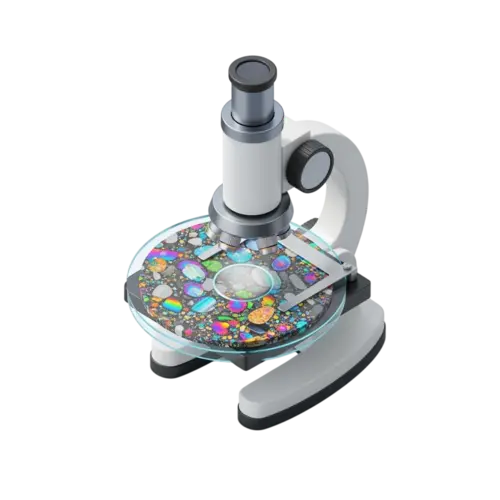
Microscopic thin-section analysis to identify mineral composition, texture, pore types, diagenesis, and reservoir quality controls. Supports facies interpretation and reservoir characterization.
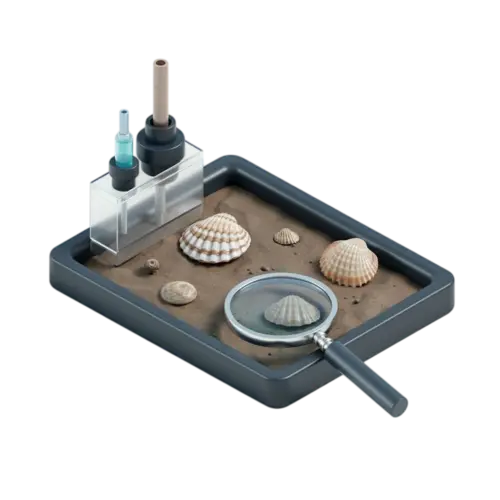
Microfossil and fossil identification to determine depositional environment, age dating, paleoenvironment reconstruction, and stratigraphic correlation for exploration and basin analysis.
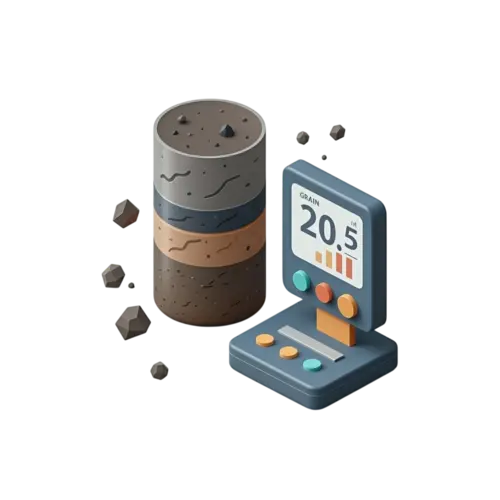
Laboratory measurement of grain density and bulk density to support petrophysical calibration, porosity calculation, volumetric estimation, and reservoir evaluation.
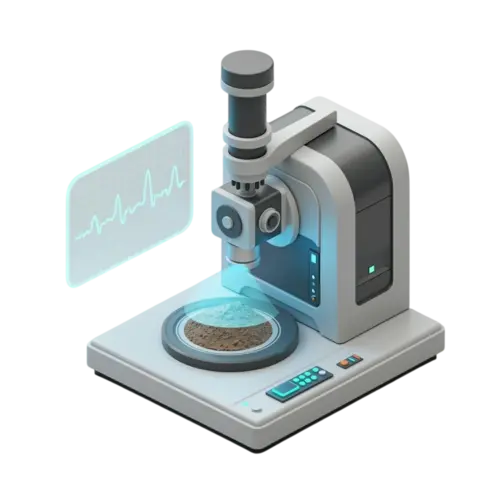
X-Ray Diffraction analysis to quantify mineralogical composition, including bulk rock and clay fractions. Essential for reservoir quality assessment, diagenesis study, and drilling risk evaluation.
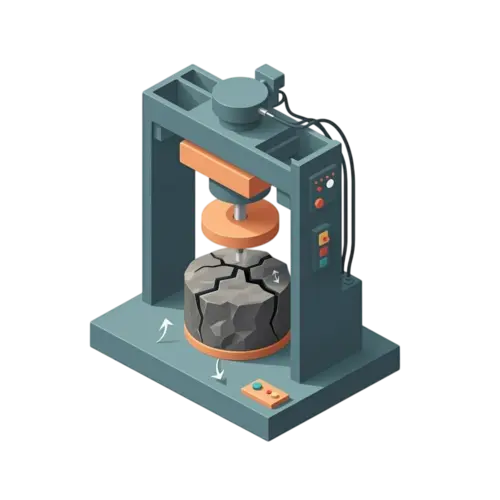
Geomechanical laboratory testing including UCS, triaxial testing, Young’s modulus, and Poisson’s ratio to support wellbore stability, hydraulic fracturing, and field development design.
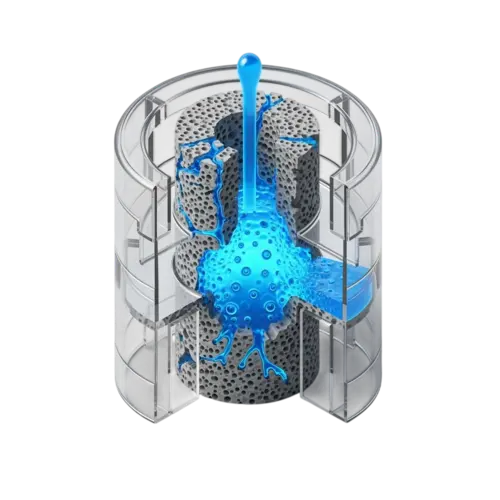
Core plug laboratory measurements to determine storage capacity and fluid flow properties. Critical for reservoir modeling, production forecasting, and recovery strategy planning.
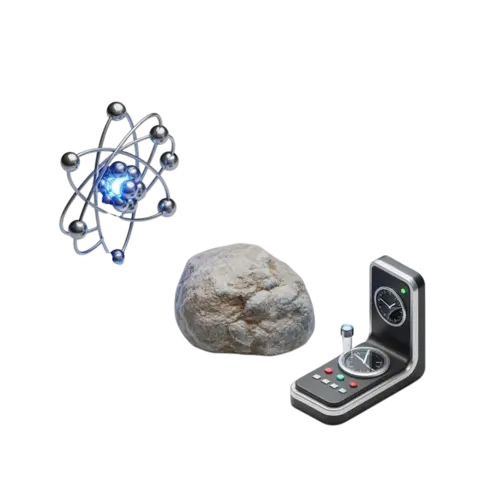
Radiometric and biostratigraphic dating methods to determine rock age, basin evolution, and tectonostratigraphic history for regional geological understanding.
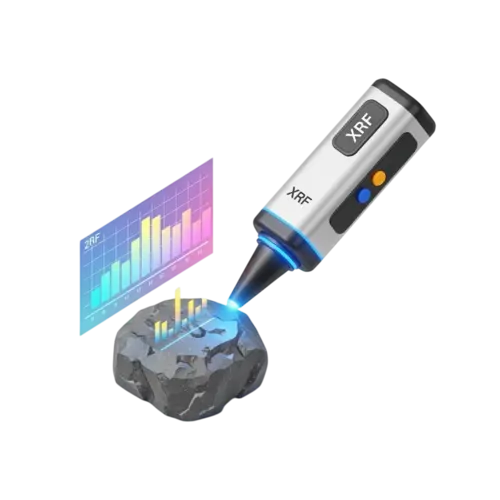
X-Ray Fluorescence analysis to determine elemental composition of rocks. Supports geochemical characterization, provenance studies, and reservoir quality evaluation.